What the Seasons Know: Reading Your Own Character Through the Shoes You Choose
Photo: PattayaPatrol, CC BY-SA 4.0, via Wikimedia Commons
Pay attention, for a moment, to the shoes you did not choose this morning. The pair left on the rack while you reached past them for something else — the ones that seemed not quite right for the grey November light, or for the mood you woke into, or for the particular quality of the day ahead. That instinctive reaching and rejecting is not trivial. It is, if you are willing to examine it, a form of self-knowledge.
The deliberate building of a shoe wardrobe — not a vast one, but a considered one — has a way of surfacing truths about the self that more direct methods of introspection sometimes miss. The shoes we return to, season after season, and the ones we abandon despite every intention of wearing them, tell a story that is worth reading carefully.
The Seasonal Turn as a Kind of Audit
There is a particular ritual familiar to anyone who maintains a proper rotation: the seasonal transition, when summer shoes are put away and autumn ones retrieved, or vice versa. Most people experience this as a practical chore. It need not be.
Approached with a degree of attention, the seasonal changeover becomes an audit of the preceding months. Which pairs returned from their storage smelling faintly of cedar and barely worn? Which came back scuffed and slightly softened, having clearly been the shoe you lived in? The disparity between what you imagined you would wear and what you actually wore is instructive.
A woman who purchases elegant pointed-toe heels every spring and returns them, largely unworn, to their box every September has learned something important about the gap between her aspirational self and her actual daily life. This is not a failure — it is data. The more honestly one reads it, the more purposefully one can shop in future.
Occasion as a Mirror
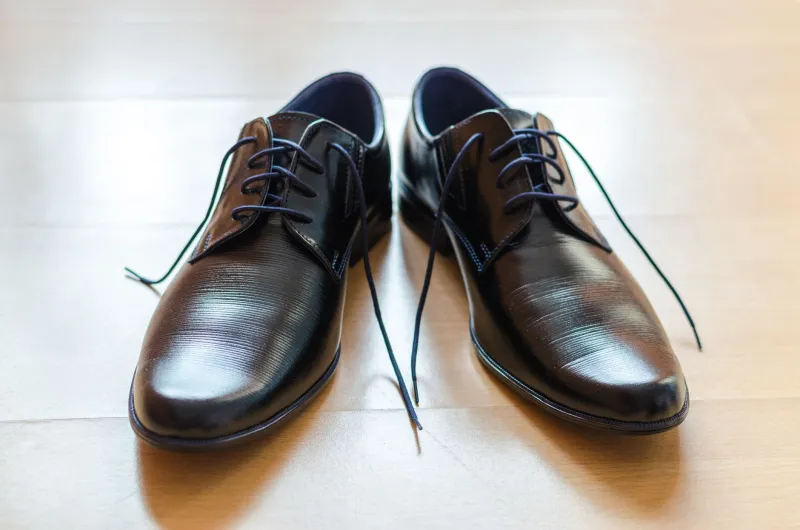
The shoe we choose for a specific occasion reveals something about how we wish to be perceived within it — which is, in turn, a reflection of how we perceive ourselves. Consider the professional who owns three near-identical pairs of dark leather Oxfords: this is not monotony but a statement of values, a deliberate emphasis on consistency and competence over novelty. The person who arrives at a formal dinner in beautifully maintained suede loafers is making an equally considered argument — one for confidence, for a certain ease within the structures of formality.
Think, too, about the shoes you choose when there is no audience to impress. Weekend errands, a walk through a market town, a quiet lunch with an old friend — these are the occasions that strip away performance and reveal preference. The shoes you wear when no one is watching are, arguably, the truest expression of taste you possess.
Building a Rotation That Reflects Rather Than Accumulates
The temptation, when thinking about a shoe wardrobe, is to think in terms of addition. More pairs for more occasions; a different shoe for every conceivable context. This approach, while understandable, tends to produce a collection that feels crowded and incoherent — a wardrobe that speaks in too many voices at once.
A more rewarding approach is to think in terms of reflection. Each pair should earn its place by corresponding to a genuine and recurring dimension of your life. If you walk to work most mornings, you need a shoe that meets that reality with intelligence and grace. If you attend formal dinners three or four times a year, one exceptional pair of evening shoes will serve you infinitely better than three mediocre alternatives. The question to ask of every potential addition is not 'could I wear this?' but 'do I actually live in a way that calls for this?'
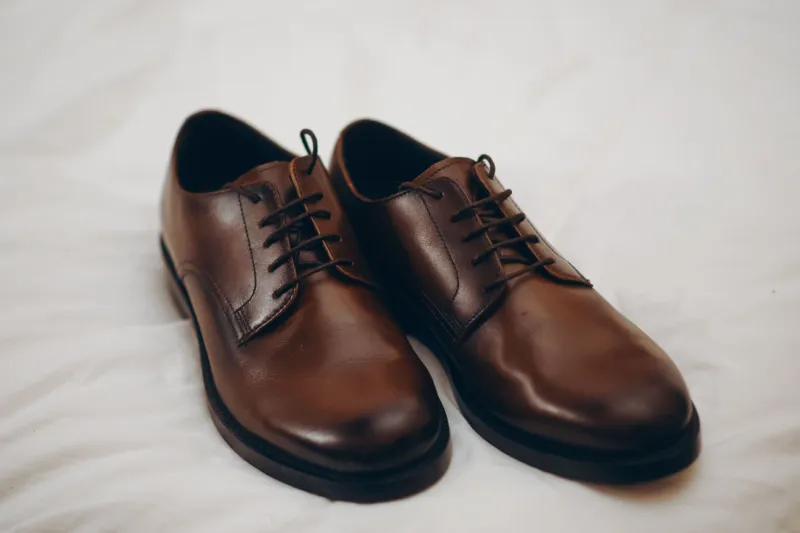
For most British professionals, a core rotation of five to seven pairs covers the full range of genuine occasion: a formal Oxford or Derby for professional contexts, a versatile loafer for the in-between hours, a weekend brogue that handles both country and town, a pair of quality boots for the colder months, and one genuinely exceptional pair held in reserve for the moments that demand it. Within these categories, personal character does its work — in the choice of last, leather, colour, and finish.
The Mood as a Navigational Tool
Beyond occasion and season, there is the subtler variable of mood — and this is where shoe rotation becomes genuinely interesting as a practice of self-awareness.
Most people, if they reflect honestly, will notice that they dress slightly differently when they feel confident versus when they feel uncertain; when they are seeking to project authority versus when they wish to be comfortable and unnoticed. The shoes participate in this shift as actively as any other element of dress. The day you reach for the soft, worn-in loafer rather than the polished brogue may be a day you are giving yourself permission to think rather than to perform. The day you choose your most immaculate pair may be a day you need the armour of elegance.
Neither impulse is wrong. Both are worth noticing. Over time, the pattern of these choices assembles into a kind of personal cartography — a map of how you move through the world and what you reach for when the terrain shifts.
The Minimal Collection as a Curatorial Act
There is a particular satisfaction available to those who reduce their shoe wardrobe to only what they genuinely love and reliably wear. Each pair becomes more legible when it is not competing for attention with a dozen others. You begin to understand, with unusual clarity, what each shoe does for you — what it says when you wear it, how it makes you feel, why you chose it in the first place.
This is the point at which a shoe wardrobe stops being a collection of objects and becomes something closer to a considered statement about the self. Not a performance of identity, but a quiet and honest expression of it — the kind that requires no audience, because it was never really for anyone else.
The shoes you choose, season after season, with care and intention, are among the most truthful things you own. It is worth paying them the compliment of attention.