The Intelligent Edit: How Rotating Fewer Shoes Preserves Both Quality and Character
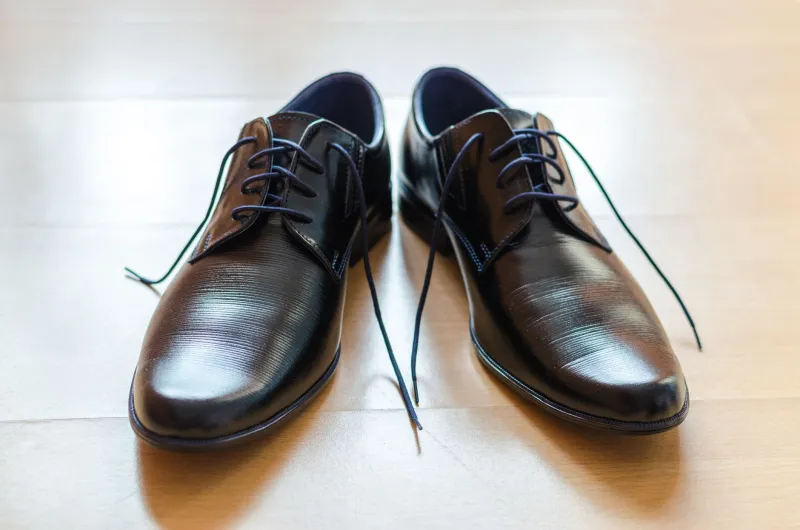
There is a particular kind of wisdom that comes with experience — the understanding that abundance rarely serves us as well as we imagine it will. In footwear, this truth is especially pronounced. The professional who owns twenty pairs of shoes and wears each of them intermittently will almost certainly find, within a few seasons, that all twenty are beginning to fail at once. The professional who owns six pairs, rotated with intention and cared for with diligence, will still be wearing those same shoes a decade hence, each one having developed the kind of rich patina that only time and proper attention can produce.
This is not merely a philosophical position. It is, when examined carefully, a practical and financial one.
The Science of Rest: Why Leather Needs Time to Recover
A well-made leather shoe is, in the truest sense, a living material. The hide breathes, absorbs moisture from the foot and the environment, and expands and contracts with temperature. When a shoe is worn on consecutive days without adequate rest, the leather does not have sufficient time to release accumulated moisture — and it is moisture, more than almost anything else, that accelerates the degradation of both the upper and the sole.
Shoemakers have long understood this. The traditional recommendation — that a fine leather shoe should rest for at least twenty-four hours between wearings — is not an arbitrary convention. It is grounded in the physical reality of how hide behaves under repeated stress. Cedar shoe trees, inserted immediately after wearing, play a crucial role in this process: they absorb residual moisture, restore the shoe's natural shape, and impart a subtle fragrance that discourages the bacterial growth responsible for odour and material breakdown.
For a shoe wardrobe of, say, five or six pairs worn across a working week, this means each pair receives two to three days of rest between outings — precisely the interval that professional cobblers and heritage shoemakers consistently recommend.
Building the Edit: Which Pairs Earn Their Place
The discipline of the shoe wardrobe edit begins not with storage or conditioning, but with the initial act of selection. Every pair in the rotation must justify its presence through both versatility and quality. A shoe that can only be worn to a single type of occasion is a shoe that will spend most of its life idle — and idleness, paradoxically, is as damaging to fine leather as overuse.
For the British professional navigating a working life that moves between boardrooms, client lunches, weekend walks in a market town, and the occasional black-tie occasion, a considered edit might look something like this: a pair of dark Oxford brogues capable of carrying both formal and smart-casual weight; a Chelsea boot in tan or mid-brown that transitions effortlessly between weekend and office; a classic Derby in black or dark navy for evenings and formal engagements; a loafer in a warm cognac for warmer months; and a pair of quality boots for the British autumn and winter that no sensible wardrobe should be without.
Five pairs. Each one chosen not for the occasion it fills today, but for the range of occasions it will serve across years.
The Conditioning Routine: A Monthly Discipline Worth Observing
Even the finest leather, left untreated, will eventually dry, crack, and lose its lustre. A conditioning routine need not be elaborate — but it must be consistent. The approach favoured by experienced shoe-care specialists involves three distinct stages, each serving a different function.
First, cleaning: a soft, slightly damp cloth or a dedicated leather cleaner removes surface dirt and any build-up of salt from winter pavements — a particular concern for those navigating British city streets between October and March. Second, conditioning: a quality leather conditioner or cream, worked gently into the hide with a soft cloth or brush, replenishes the natural oils that wearing gradually depletes. Third, polishing: a wax-based polish, buffed to a shine, provides both the finish and a degree of water resistance that protects against the British climate's persistent enthusiasm for rain.
This process, conducted monthly for regularly worn pairs and seasonally for those in storage, adds perhaps thirty minutes to a month — a modest investment against the years of additional life it affords.
Seasonal Storage: Protecting What Is Not Being Worn
The shoes not currently in rotation deserve as much consideration as those being worn. Leather stored incorrectly — in damp conditions, exposed to direct sunlight, or crushed without shoe trees — will deteriorate even in the absence of wear. The ideal environment for seasonal storage is cool, dry, and dark: a breathable cotton dust bag, rather than a sealed plastic box, allows air circulation while protecting against dust and light.
For winter boots stored through the summer months, or lightweight summer shoes set aside for the colder half of the year, a light application of conditioner before storage and another upon retrieval ensures the leather remains supple and receptive throughout its period of rest.
The Financial Case: Fewer Pairs, Greater Return
The arithmetic of quality footwear is, once understood, remarkably straightforward. A pair of shoes constructed from premium leather with a Goodyear-welted sole — a construction method that allows the sole to be replaced when it wears, rather than requiring the shoe to be discarded — represents a fundamentally different proposition from a pair assembled with adhesive and synthetic materials.
The welted shoe, properly cared for, can be resoled multiple times. Its upper, conditioned and rested correctly, will outlast several sets of soles. The cost per wearing, spread across a decade or more of use, is frequently lower than that of a cheaper shoe replaced every eighteen months.
This is the quiet logic of the discerning wardrobe: that restraint and quality, practised together, are not an indulgence but an efficiency. To own fewer shoes and to care for them well is, in the end, the most considered choice a professional can make — for their wardrobe, for their finances, and, increasingly, for the broader question of what it means to consume with intention in a world that has begun, at last, to ask that of us.