A Wardrobe of Moments: The Case for Investing in Fewer, Finer Shoes
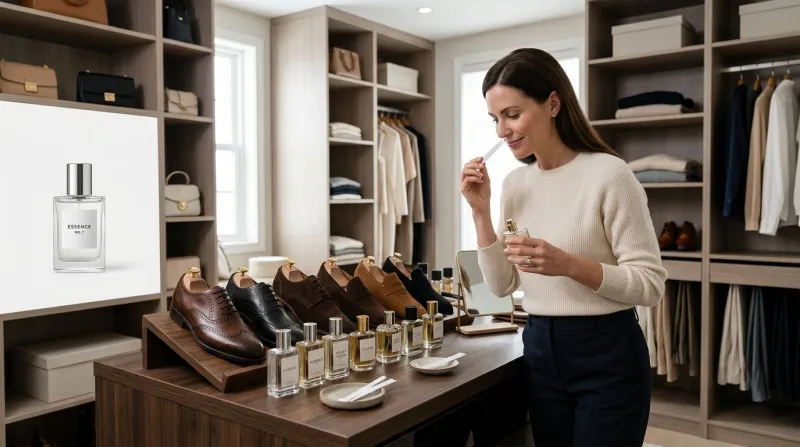
Photo: curated luxury shoe collection wardrobe elegant British style editorial, via luxafi.com
Walk into the wardrobe of someone who truly understands dressing and you will notice something that runs counter to every trend cycle the fashion industry has produced in the past three decades: there will not be very many shoes. What there will be, however, is a considered selection of pairs that have clearly been chosen with care, worn with frequency, and maintained with the kind of attention that signals genuine respect for the objects themselves.
This is not minimalism for its own sake, nor is it the false economy of buying cheaply and replacing often. It is something distinctly more British in its sensibility — a recognition that quality, properly chosen and properly cared for, will serve you better across the full breadth of your life than volume ever could.
The Tyranny of the Impulse Purchase
The fast-fashion model has done considerable damage to the way many of us think about footwear. When shoes are priced to be disposable, they are designed to be disposable — and the habits of consumption that follow are equally disposable in their logic. A pair purchased on a whim for a single occasion, worn twice, and forgotten at the back of a wardrobe represents not a bargain but a compound loss: of money, of space, and of the opportunity to have invested in something genuinely worth owning.
The antidote is not a rigid set of rules about which shoes one must own. Rules, by their nature, cannot account for the particulars of individual lives. What is more useful — and more enduring — is a philosophy: a framework for thinking about footwear in terms of the moments it must serve, the longevity it must offer, and the quiet confidence it must reliably provide.
Begin with Life's Architecture
Rather than approaching a shoe collection as a catalogue of styles, consider instead the architecture of your own life. What are its recurring occasions? Where do you spend your hours, and what does each of those contexts demand of the shoes on your feet?
For many in Britain, this architecture might include a professional environment that requires polish and authority — whether that is a boardroom, a client meeting, or a court. It will almost certainly include social occasions that range from relaxed dinners to formal celebrations. For those with access to the countryside — and in Britain, that is a significant portion of the population — there will be weekends that demand something altogether more robust, yet no less considered.
When you map your life in this way, the number of genuinely distinct shoe categories you require becomes surprisingly small. And within each category, the qualities that matter most — construction, fit, versatility of colour and silhouette — become far easier to identify.
The Professional Pair
For those who work in environments where appearance carries professional weight, a single pair of impeccably made shoes in a dark, neutral leather — a deep tan, a rich burgundy, or a classic black — will serve more occasions with more authority than a rotating cast of lesser alternatives.
The key qualities to seek here are construction and last. A shoe built on a Goodyear-welted sole will flex with the foot naturally over a long working day, improving in comfort as it conforms to the wearer's particular contours. The silhouette should be clean and unadorned enough to pair with tailoring, yet sufficiently characterful to carry a smart-casual ensemble without appearing incongruous. This is a pair that should be bought once and worn for years — resoled when necessary, polished regularly, and treated as the workhorse of quality that it is.
The Occasion Shoe
Every wardrobe requires at least one pair capable of rising to a significant moment — a wedding, a formal dinner, an evening at the theatre or a significant anniversary celebration. Here, the temptation is to over-invest in novelty: a style so emphatically of the current moment that it will look dated within two seasons.
The wiser approach is to seek a shoe of genuine distinction that derives its elegance from proportion, material, and finish rather than from trend. A patent leather Oxford, a sleek pointed-toe heel in a rich satin, or a beautifully constructed loafer in a statement leather — these are pieces that will photograph as well in a decade as they do today, because their appeal is rooted in the permanent rather than the provisional.
The Weekend Shoe
Britain's particular relationship with the outdoors — the coastal walks, the country house visits, the Saturday morning farmers' markets — demands a shoe that can navigate terrain without sacrificing character. This is perhaps the category most frequently underserved by those who default to trainers of no particular distinction.
A well-made Derby in a heavy-grained leather, a Chelsea boot with a proper rubber-studded sole, or a driving shoe constructed from a supple, weather-resistant hide will perform the practical functions required whilst retaining the considered aesthetic that distinguishes a curated wardrobe from a merely functional one. These are shoes that look better for being worn, that develop a personality through use, and that will accompany the wearer through the full, varied texture of a British weekend.
The Philosophy of the Long View
What unites all of these categories is a single, orienting principle: that the best shoe for any occasion is the one that will still be the best shoe for that occasion in ten years' time. This is the long view — the willingness to defer the gratification of novelty in favour of the deeper satisfaction of owning something genuinely excellent.
It is a perspective that has always sat comfortably within the British tradition of quality craftsmanship, of objects made to be passed down rather than thrown away, of dressing as an act of considered self-expression rather than reactive consumption. And it is a perspective that, once adopted, transforms the experience of getting dressed from a daily negotiation with a wardrobe full of compromises into something considerably more pleasurable.
Fewer shoes, chosen with greater care, worn with greater confidence, and maintained with genuine attention — this is not a sacrifice. It is, in every meaningful sense, an upgrade.