Platform to Platform: What Your Commute Shoes Say About Your Professional Standards
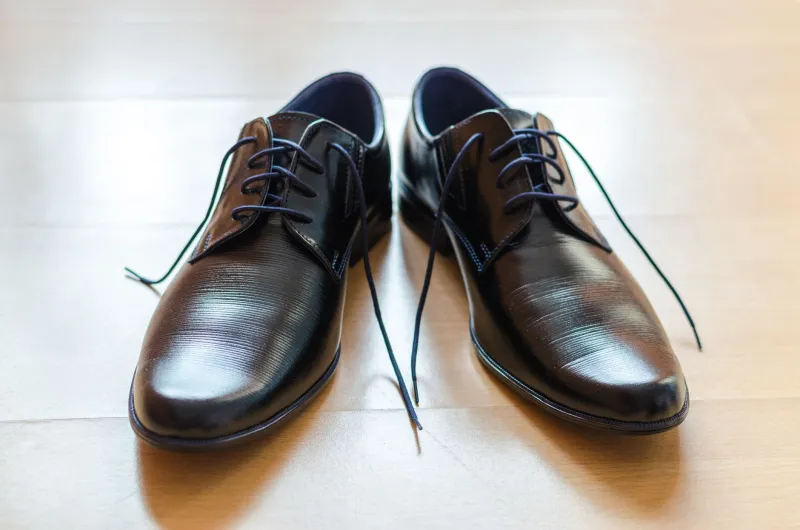
At half past seven on a Tuesday morning, somewhere between Clapham Junction and Waterloo, a quiet but telling drama unfolds across every carriage. Observe the footwear. There is the City solicitor in immaculate black Derbies, already composed for the day ahead. There is the creative director in white leather trainers, signalling a studied nonchalance. There is the senior accountant who has, inexplicably, chosen to wear yesterday's scuffed loafers with an otherwise impeccable suit.
None of these choices are neutral. Each communicates something — about priorities, about self-regard, about the relationship between how one presents oneself and how one expects to be received. Shoes, as any student of British professional culture will confirm, are the detail that colleagues notice and rarely mention.
The Unconscious Calculus of the Morning Rush
Most professionals do not consciously think about what their commute shoes communicate. The decision is made quickly, under pressure, often in low light. And yet the cumulative effect of those daily choices is anything but trivial.
Psychologists who study enclothed cognition — the documented influence of clothing on the wearer's own mental state — have found that what we put on our feet can affect our posture, our gait, and consequently our mood and confidence before we have even reached the office. A shoe that fits well, supports the foot correctly, and feels considered rather than improvised changes the quality of the journey itself. It signals to the wearer, before it signals to anyone else, that the day has been prepared for.
This matters more than is generally acknowledged. The commute is not merely transit. For many British professionals, it is the only uninterrupted thinking time in the working day — a period for mental preparation, for reviewing priorities, for composing oneself before the demands of the office begin. To spend that time in shoes that pinch, slip, or distract is to arrive already at a disadvantage.
The False Economy of the Commute Compromise
A persistent habit among British professionals is the maintenance of two distinct shoe categories: the presentable pair kept at the office, and the 'commuting shoes' — usually older, often significantly less distinguished — worn for the journey. The logic is understandable. Pavements are unforgiving. Tube carriages are crowded. Rain is a near-constant variable.
And yet this approach carries its own costs. It requires a change of shoes upon arrival — a small but accumulated friction in the morning routine. It means that the shoes worn during the commute, often the first footwear encountered by colleagues arriving at the same time, are frequently the least representative of one's actual standards. And it treats the journey itself as a period unworthy of proper presentation, a framing that quietly undermines the composure the commute might otherwise support.
The more considered approach is to invest in shoes specifically engineered to perform across both contexts: shoes that can withstand the demands of urban transit without sacrificing the authority required in a professional environment. This is not a counsel of extravagance. It is an argument for precision — for identifying footwear that genuinely serves the full arc of the working day.
What the Journey Actually Demands
The requirements of the British urban commute are, when examined carefully, quite specific. The average London commuter walks between three and five kilometres daily simply in the course of getting to and from work. Add the standing time on platforms, the occasional sprint for a departing bus, and the navigating of uneven Victorian pavements, and the physical demands on commute footwear become substantial.
A shoe equal to this task must offer genuine sole thickness — not merely an aesthetic suggestion of it. It must have a last shaped to accommodate the natural spread of a foot that has been walking rather than sitting. It must be made from leather that can be wiped down after an encounter with a puddle and recover its finish without drama. And it must, above all, remain structurally supportive across the full duration of the journey rather than simply for the first twenty minutes.
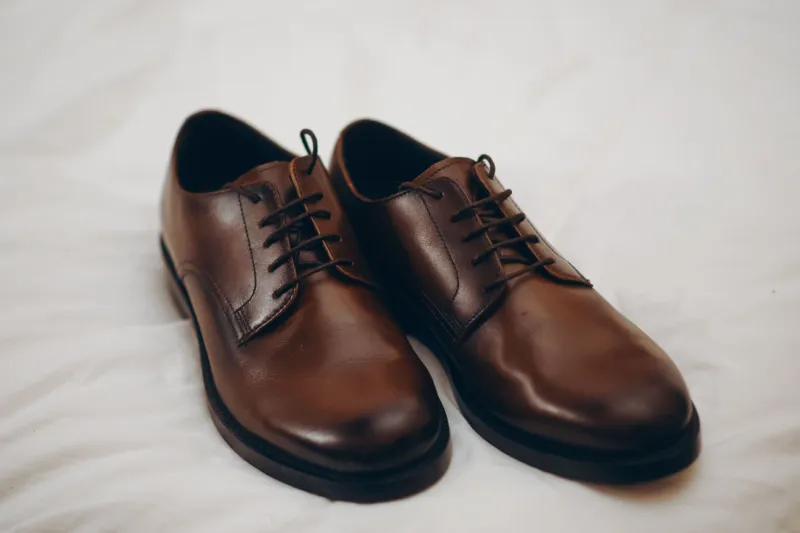
The good news is that these qualities are precisely those associated with traditional British shoemaking at its most rigorous. A well-constructed leather Oxford or Derby, built on a proper Goodyear welt with a cushioned insole and a sole of appropriate weight, is not merely a formal shoe. It is, functionally, one of the most capable pieces of commute footwear available — provided it has been made with sufficient integrity.
Reading the Room Before You Leave Home
The shoes chosen for the commute also send signals that extend beyond the individual wearer. In sectors where client-facing presentation matters — law, finance, consultancy, luxury retail — the journey to the office is rarely entirely private. Colleagues are encountered on platforms. Clients are sometimes seen unexpectedly. The city, particularly in London, is smaller than it appears.
This is not an argument for performative dressing. It is, rather, a reminder that the professional persona does not begin at the office door. The composure one cultivates in transit — the posture, the quiet confidence, the sense of having prepared — is part of the same continuum as the meeting room manner. Shoes that support that composure from the moment one leaves the house are not a luxury. They are a tool.
Investing in the Journey, Not Just the Destination
The professionals who have made peace with this idea — who have stopped treating the commute as a period to be endured in provisional footwear — tend to describe the change in similar terms. The journey feels different when the shoes feel right. There is less mental noise, less physical distraction, a greater capacity to arrive composed rather than merely present.
This is the understated argument for commute footwear as a genuine form of self-care: not in the indulgent sense the phrase has acquired, but in its more precise meaning. To care for oneself is to attend to the conditions that allow one to function well. A shoe that makes the journey genuinely comfortable, that looks appropriate from pavement to boardroom, and that improves rather than undermines one's sense of readiness — that shoe is paying for itself with every platform crossed.
The commute calculus, properly understood, is not complicated. It simply requires the willingness to apply to the journey the same standard of consideration one applies to the destination.