The Unworn Pair: Inside the World of Britain's Most Serious Shoe Collectors
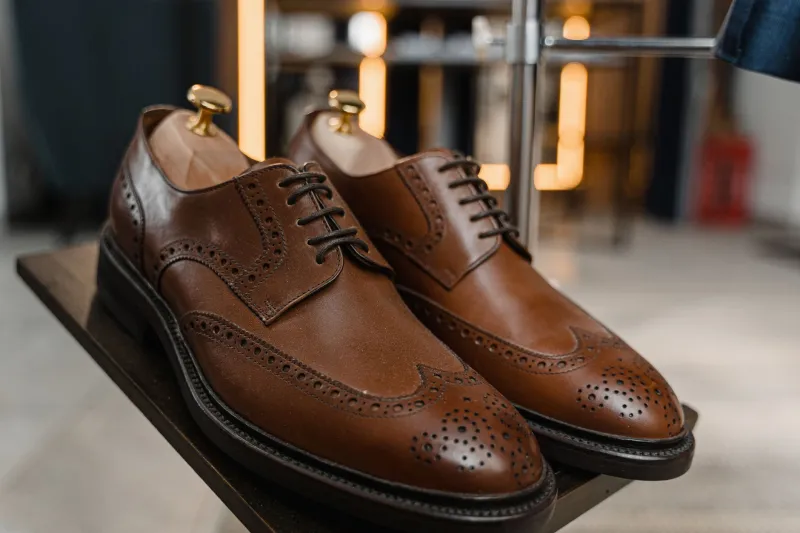
In a climate-controlled room in Edinburgh, a retired solicitor keeps forty-three pairs of shoes he has never worn. Each sits in its original box, wrapped in acid-free tissue, positioned on a cedar shoe tree. He can tell you the history of every pair—who made it, when, in what leather, and why it represents something significant in the story of British shoemaking. He has no intention of wearing any of them. The question of whether they are shoes, in any functional sense, does not particularly interest him.
He is not unusual. Across Britain, a quiet community of serious collectors has grown around premium footwear—people for whom the acquisition of a fine shoe has less to do with what it will carry them through and everything to do with what it embodies. They are collectors in the fullest sense: driven by knowledge, by aesthetic conviction, and by a relationship with objects that most people would find difficult to articulate.
What Collecting Actually Means
The word 'collector' covers a great deal of ground. At one end sits the person who has simply accumulated more shoes than they can wear, vaguely aware that several pairs are particularly special. At the other end sits someone whose acquisition is systematic, informed, and governed by a logic as coherent as any art collection.
Britain's serious shoe collectors tend toward the latter. They are not accumulating. They are curating—building a body of objects that together tell a story about craft, history, and the particular genius of British shoemaking at its finest.
What they collect varies, but certain categories recur. Limited production runs from heritage makers. Shoes representing pivotal moments in design history. Collaborations between craftspeople and designers whose alignment produced something genuinely unrepeatable. Shoes that document a technique—a particular welt construction, a dying method, a last shape—that has since been discontinued. These are not luxury goods in the conventional sense. They are primary sources.
The Tension Between Beauty and Function
There is a paradox at the heart of shoe collecting that its practitioners engage with openly. A shoe is, by definition, a functional object. Its beauty is inseparable from the fact that it was designed to be worn, to accommodate a human foot, to bear weight and movement and the accumulated marks of a life. To preserve it unworn is, in some sense, to deny it its nature.
Most collectors are aware of this tension and have made their peace with it in different ways. Some argue that preservation is itself a form of respect—that a shoe of sufficient rarity and quality deserves to be protected from the very use that would eventually destroy it. Others maintain a distinction between their 'working' collection, which is worn and enjoyed, and a preserved archive, which is not. A few simply accept the contradiction and find that it does not diminish their pleasure.
What the tension reveals is something important about why people collect at all. The collector's impulse is not primarily about use. It is about possession in a deeper sense—about having, contemplating, and understanding an object in its fullest dimension. The shoe that is never worn can be studied, appreciated, and known in a way that the shoe worn daily cannot.
Ritual and Curation
Visit a serious collector's archive and what strikes you first is the quality of attention. The organisation is precise and purposeful. The storage conditions are deliberate. The documentation—photographs, receipts, notes on provenance—is meticulous. This is not hoarding. It is stewardship.
The rituals of collection are, for many practitioners, as important as the objects themselves. The careful unpacking of a new acquisition. The assessment of condition and authenticity. The decision about where it belongs in relation to what is already there. These are acts of sustained attention in a world that rarely rewards it, and they carry their own quiet satisfaction.
Several collectors describe a meditative quality to the time spent with their archive—a quality of presence and focus that they find difficult to achieve elsewhere. The shoe, as an object, demands close looking. It rewards it. The details that emerge under careful examination—the precision of a stitch, the particular way a leather has been finished at the welt, the subtle geometry of a last—are not visible at a glance. They reveal themselves to patience.
Investment, Memory, and the Question of Ownership
Premium footwear has, in recent years, attracted serious attention as an investment category. Certain limited editions and heritage pieces have appreciated considerably, and the secondary market for unworn collector's shoes has become sophisticated and well-documented. For some collectors, financial value is a consideration. For most, it is not the primary one.
What motivates the serious collector is more complex than financial return. Memory plays a significant role—the pair purchased to mark a particular occasion, or acquired because it connects to a period of life now past. Heritage matters too: the sense of holding something that documents a tradition of making that stretches back generations and deserves to be honoured.
At Russell & Bromley, the understanding of what a fine shoe represents has always extended beyond the practical. A shoe built with genuine craft is an argument about value—about the worth of skill, time, and material brought together in service of something beautiful and enduring. The collector who preserves such a shoe unworn is, in their way, making the same argument. They are insisting that some things matter enough to be kept.
What the Obsession Reveals
To spend time among serious shoe collectors is to encounter people who are, in the most literal sense, paying attention. They have chosen an object of considerable complexity—technically, historically, aesthetically—and committed themselves to understanding it deeply. In doing so, they have arrived at a relationship with craftsmanship that most people never develop.
Perhaps that is what shoe collecting ultimately reveals: not an eccentricity, but a refusal. A refusal to accept that beautiful things are merely functional. A refusal to engage with objects only on the surface. A refusal, finally, to live at the pace that would make such attention impossible.
The unworn shoe, preserved in its box, is not a waste. It is a statement. And in the particular, considered world of British craft and heritage, it is a statement that deserves to be heard.