In Another's Shoes: The Quietly British Tradition of Borrowed Footwear and What It Has Always Meant
The expression 'to put yourself in someone else's shoes' is so thoroughly embedded in the English language that we rarely pause to consider its origins — or the material reality it once described. For much of British history, shoes were not merely metaphors for empathy. They were scarce, expensive, and shared. The borrowed shoe was not a romantic conceit. It was a practical necessity, and out of that necessity grew something that has proved surprisingly durable: a cultural habit of intimacy, resourcefulness, and connection expressed through footwear.
This is a tradition that runs deeper than sentiment. It touches the history of British wartime resilience, the particular warmth of working-class community, and the enduring rituals of the wedding morning. To borrow a shoe in Britain has rarely been merely a logistical arrangement. It has almost always been, in some measure, an act of trust.
Rationing, Resourcefulness, and the Shared Wardrobe
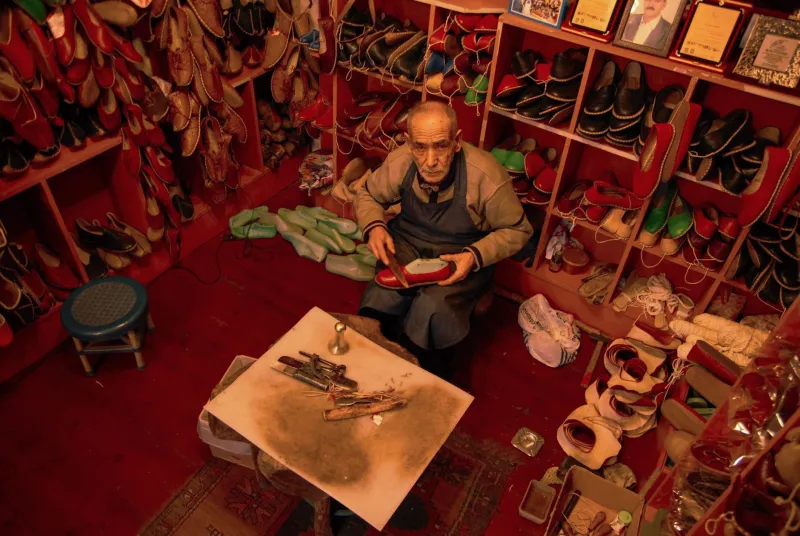
The Second World War imposed upon British civilians a relationship with clothing and footwear that was, by necessity, collective. Leather was requisitioned. Coupon books governed the purchase of new shoes, with adults allocated a strictly limited number per year. Repair was not a preference but a requirement, and the cobbler became a figure of quiet civic importance.
In this context, the borrowing of shoes was entirely commonplace. Women attending dances, interviews, or special occasions would circulate a single pair of good heels among sisters, neighbours, and colleagues. The shoes travelled between households with a frequency that would astonish the contemporary consumer. And yet, those who lived through that period frequently recall the arrangement not with hardship but with warmth — as evidence of a community that understood shared ownership as a form of mutual generosity.
The historian and cultural commentator Juliet Gardiner has noted that wartime rationing produced, paradoxically, a heightened appreciation for objects of quality. A single pair of well-made shoes, passed between friends, acquired a significance that no individually owned item could quite replicate. Each occasion it attended became part of its biography. Each wearer contributed to its story.
The Wedding Morning and the Something Borrowed
No British borrowing tradition is more thoroughly codified than the one embedded in the old matrimonial rhyme. 'Something borrowed' — the third of four talismanic items a bride must carry — has been interpreted in many ways across generations. But footwear, perhaps more than any other article, has proved the most resonant choice.
The logic is not arbitrary. Shoes carry a particularly intimate relationship with the body. They are shaped, over time, by the specific weight, gait, and habit of their wearer. To borrow a shoe from a woman whose marriage is happy and established is, in folk tradition, to borrow something of her fortune — to step, quite literally, into a life well lived.
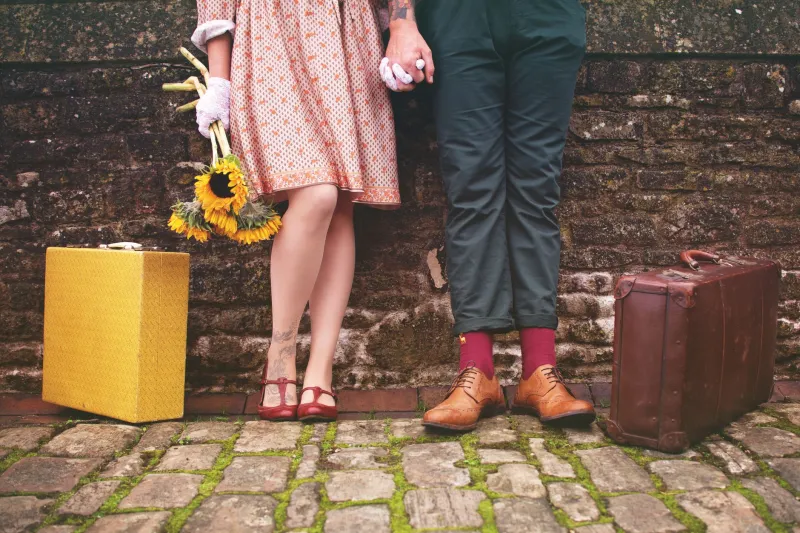
Contemporary brides continue this practice with remarkable frequency, though the motivations have evolved. A daughter wearing her mother's wedding shoes, a bride stepping into the kitten heels her grandmother wore in 1962 — these choices are less about superstition now than about continuity, about the desire to carry something of the women who came before into the ceremony ahead.
Louise Carpenter, a London-based wedding stylist who has worked with clients across Britain for fifteen years, observes: 'The borrowed shoe is almost always the most emotionally significant item on the wedding morning. Jewellery is beautiful, but shoes are intimate. There is something about the act of putting them on — the physical effort of it, the moment of adjustment — that makes the connection feel very real.'
Class, Community, and the Democratisation of Elegance
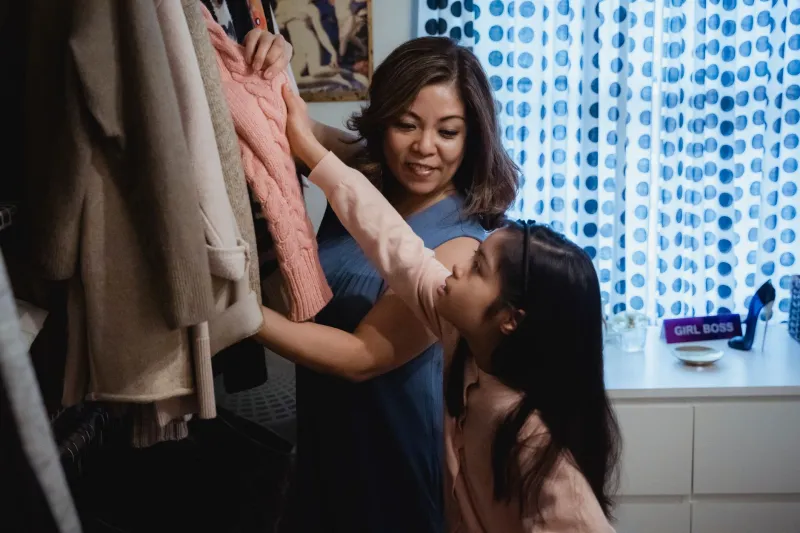
Beyond wartime and weddings, the borrowed shoe has long served a quietly democratic function in British life. For generations of working-class families, access to finer footwear arrived not through purchase but through relationship. A neighbour with a slightly larger wardrobe, an aunt who had done well, an employer who passed on last season's court shoes — these were the informal channels through which elegance circulated.
There is something distinctly British about this arrangement. It reflects a cultural pragmatism that has always coexisted with aspiration — the understanding that quality need not be owned outright to be appreciated, that the experience of wearing a well-made shoe is available to those who cannot yet afford to possess one. It is, in its modest way, a form of cultural generosity.
This tradition finds an echo in the contemporary resale and rental markets for luxury footwear, which have grown substantially in Britain over the past decade. The principle — that a beautifully made shoe ought to be worn, not merely stored — is ancient, even if the platforms facilitating it are new.
When the Borrowed Shoe Becomes the Better Story
There is a particular kind of narrative that attaches itself to borrowed objects, and shoes are especially susceptible to it. The pair worn to a job interview that changed the course of a life. The heels slipped on at a friend's insistence for a party at which a future spouse was met. The sturdy boots borrowed from a brother for a long walk undertaken on impulse.
These stories share a structure: the shoe was not intended for the occasion, and yet it proved precisely right. The borrowing introduced an element of contingency — of life not entirely planned — that the occasion required. There is a reason that so many of Britain's most fondly remembered shoe stories involve a pair that did not originally belong to the wearer.
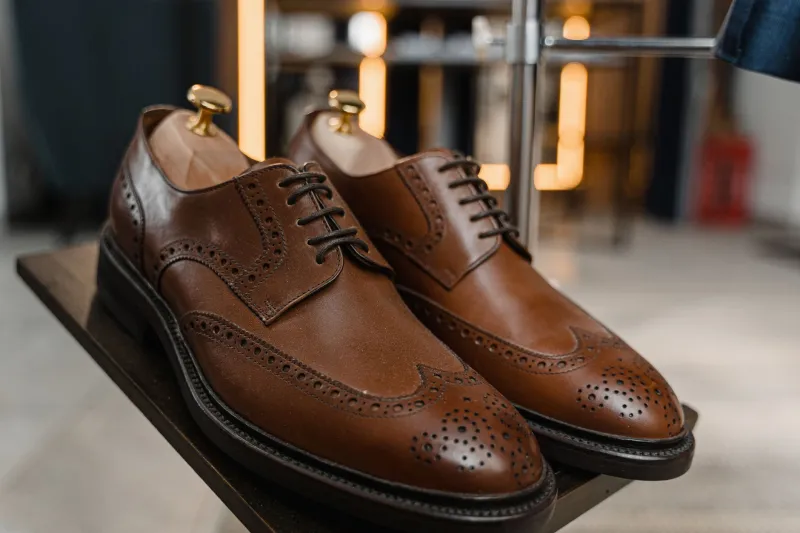
At Russell & Bromley, we understand that a shoe of genuine quality possesses a life that extends beyond the single relationship between maker and first owner. The construction methods we employ, the leathers we select, the attention we invest in lasting and finishing — all of these are designed to produce shoes that endure, that age with character, and that remain worthy of being passed between hands and worn by more than one life.
The borrowed shoe is not a lesser experience. In British culture, it has often proved the richer one.