What the Hallway Holds: The Shoes at Your Threshold and What They Say About You
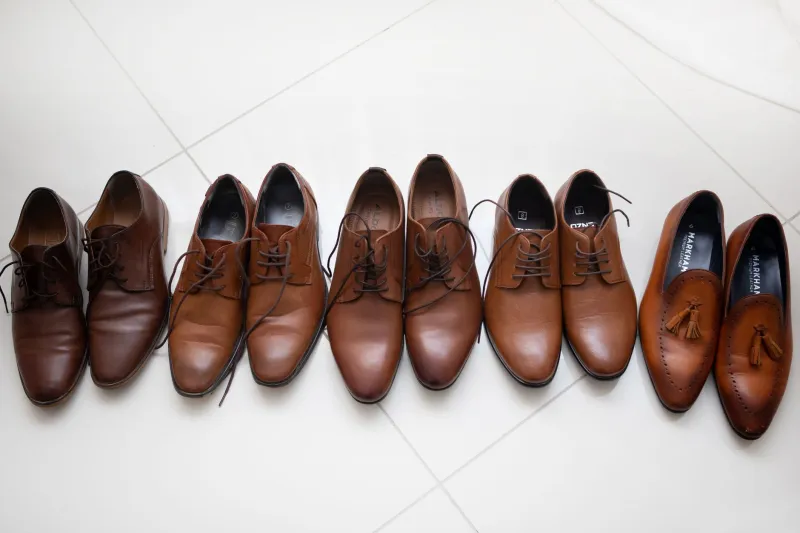
There is a moment, familiar to anyone who has arrived at a well-kept British home, when the front door opens and the eye is drawn instinctively downward. Before the coat hooks, before the console table with its careful arrangement of keys and correspondence, there are the shoes. Lined up or loosely gathered, they form a kind of silent autobiography — a record of comings and goings, of priorities and preferences, of the character that lives beyond the threshold.
The hallway has always occupied a peculiar position in British domestic life. It is neither fully private nor entirely public; it is the space in which we compose ourselves before stepping out and decompose, however slightly, upon returning. The shoes we station there are chosen — consciously or otherwise — to serve that liminal function. And in that choosing, we reveal considerably more than we might intend.
The Threshold as Social Statement
In Britain, the relationship between home and street has long been governed by an instinct for decorum. We are, as a culture, quietly preoccupied with the impression we make at the door — on the postman, on a neighbour pausing to return something borrowed, on the unexpected guest who appears on a Tuesday afternoon with no prior warning. The shoes visible in that moment are part of the greeting, whether we acknowledge them or not.
A pair of beautifully maintained leather loafers, resting heel-to-toe beside the mat, suggests a person who considers presentation even in repose. Scuffed trainers kicked off at an angle imply urgency, informality, a life lived at pace. Neither is inherently better — but both are communicative. The discerning host understands this instinctively and curates their hallway accordingly, treating it not as a dumping ground but as an anteroom with its own quiet standards.
This is not mere affectation. It is an extension of the same sensibility that prompted generations of British households to keep a 'best' service for visitors — the understanding that hospitality begins before the kettle is on, in the impression made at the very first glance.
The Hall Shoe as Practical Philosophy
Beyond social signalling, the shoes we keep at our entrances reflect a practical philosophy about preparedness. Consider the individual who maintains a dedicated pair of slip-on shoes beside their door — something elegant enough to answer the bell, robust enough to step outside for a moment without ceremony. This person has thought about their threshold. They have anticipated the small interruptions of daily life and equipped themselves accordingly.
For many, this shoe is a leather mule or a structured loafer: something that conveys composure without requiring laces, something that bridges the gap between interior ease and exterior readiness. It is, in its way, one of the most considered purchases a person can make — precisely because it receives so little deliberate attention in most wardrobes.
The alternative — the frantic search for something appropriate when the doorbell sounds unexpectedly — is a minor domestic indignity that the prepared household avoids entirely. There is a particular satisfaction in being able to answer the door with full composure, shod appropriately, without having rummaged through a pile by the stairs.
What Arrivals and Departures Reveal
Watch how a person leaves their home and you learn something about how they inhabit it. The individual who slips on the same pair of well-polished shoes each morning — shoes that have been left in precisely the right position the night before — moves through their threshold with intention. The shoes are not merely footwear; they are the final act of a considered preparation, the last detail before the world begins.
Departures, too, carry their own grammar. Some people leave the house as though launched from it — shoes grabbed, door pulled shut, pace already established before the pavement begins. Others leave slowly, taking a moment at the door, perhaps because the shoes require a brief attention before they feel right. These rituals are not trivial. They mark the boundary between the self at home and the self in the world, and the shoes at the threshold are the instrument of that transition.
Equally instructive are the shoes left behind. A pair set neatly beside the door suggests a person who returns home with the same deliberateness with which they left — someone who changes shoes as a conscious act of crossing back into private life. In several European cultures, this practice is formalised; in Britain, it remains more personal, more individual, and therefore more revealing.
The Guest's Perspective
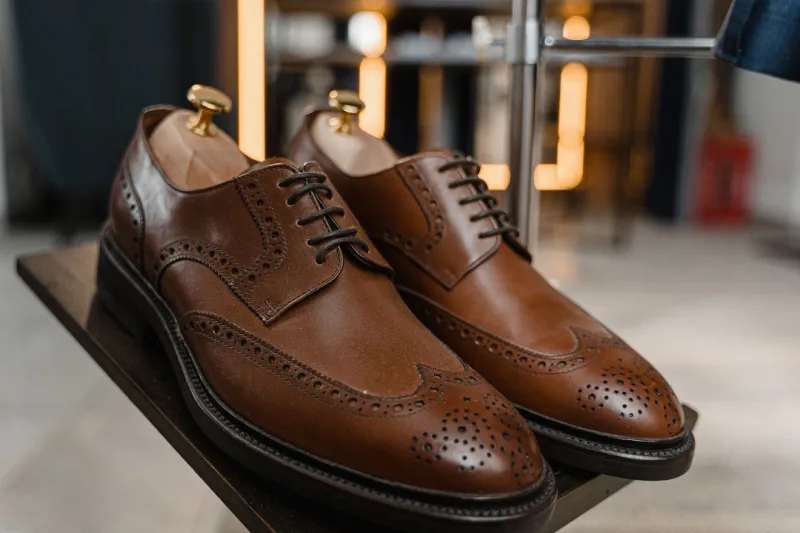
For the visitor, the hallway shoe offers an immediate and unguarded insight into their host. A worn pair of gardening shoes beside a gleaming pair of Chelsea boots suggests a life of contrasts, of practicality and elegance held in comfortable coexistence. A single pair of immaculate brogues, positioned with geometric precision, implies a different temperament entirely — one in which order is not merely preferred but felt as a necessity.
The most gracious hosts understand that their threshold is the first room a guest encounters, and they treat it with corresponding care. This does not mean an absence of lived-in warmth — quite the opposite. A hallway that feels genuinely inhabited, with shoes that speak of real life rather than staged presentation, is far more welcoming than one that has been scrubbed of all personality. The distinction lies in quality and intention: shoes that are well-made and properly maintained communicate care, regardless of whether they are formal or casual in character.
Choosing Your Threshold Shoe
If the hallway shoe is, as this piece suggests, a statement of character, then it warrants the same consideration given to any other significant purchase. The ideal threshold shoe possesses several qualities: it must be easy to put on without creating an undignified pause, it must be presentable in the event of an unexpected visitor, and it must be comfortable enough to wear without prior notice.
A leather slip-on loafer, a refined mule in a neutral tone, or a well-structured slipper-shoe in calf leather — these are the archetypes of the thoughtful threshold wardrobe. They should require minimal effort to maintain, since they are, by definition, frequently used. And they should be chosen with the understanding that they will be seen — by guests, by delivery drivers, by neighbours — in the unguarded moments when self-presentation is at its most honest.
The hallway is where we are most ourselves: neither fully dressed for the world nor entirely at our ease within it. The shoes we keep there are the truest reflection of that in-between self — and, for those who choose them well, the most quietly eloquent statement in the house.