The First Considered Purchase: What Your Inaugural Investment in Fine Footwear Reveals About You
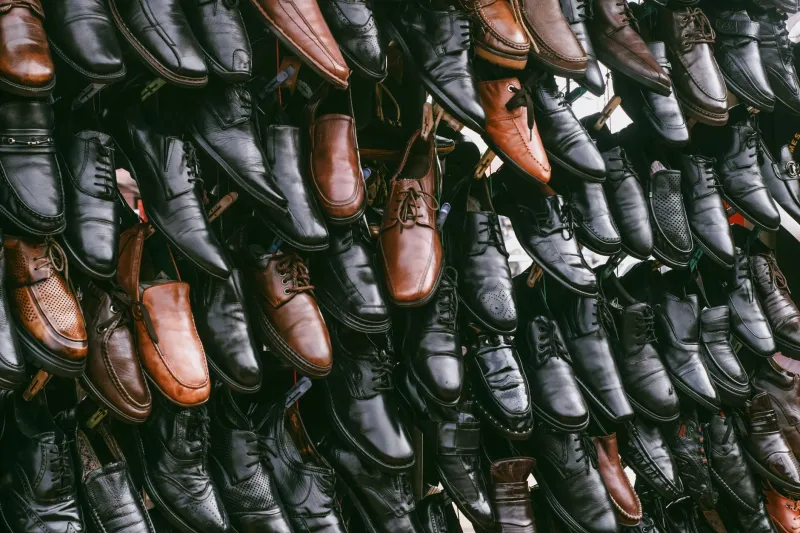
There is a particular gravity to the first time a person walks into a serious shoe shop with genuine purpose. Not to browse. Not to replace something worn through. But to invest — deliberately, thoughtfully — in a pair of shoes that represents a departure from the convenient and the disposable. It is, in the quietest possible sense, a moment of self-definition.
That inaugural decision, the first truly considered purchase in fine footwear, is rarely about shoes alone. It speaks to something deeper: a shift in values, a newly articulate sense of self, and an emerging understanding that the objects with which we surround ourselves are not merely functional but expressive.
The Psychology Behind the Pivot
Most people arrive at their first premium shoe purchase through one of several routes. Some are prompted by a professional milestone — a promotion, a first significant role, or the recognition that their current footwear is quietly undermining an otherwise polished presentation. Others are nudged by a trusted mentor, a parent's well-worn brogues glimpsed from childhood, or a gradual disillusionment with the cycle of replacing cheap shoes season after season.
What unites these different paths is a common psychological shift: the move from reactive consumption to intentional acquisition. The person who buys their first pair of genuinely well-crafted shoes has, at some level, begun to think about what they own and why. They are no longer simply filling a gap; they are making a statement about the kind of person they intend to be.
This is not vanity. It is self-awareness — and there is a meaningful distinction between the two.
What the Choice of Last Tells Us
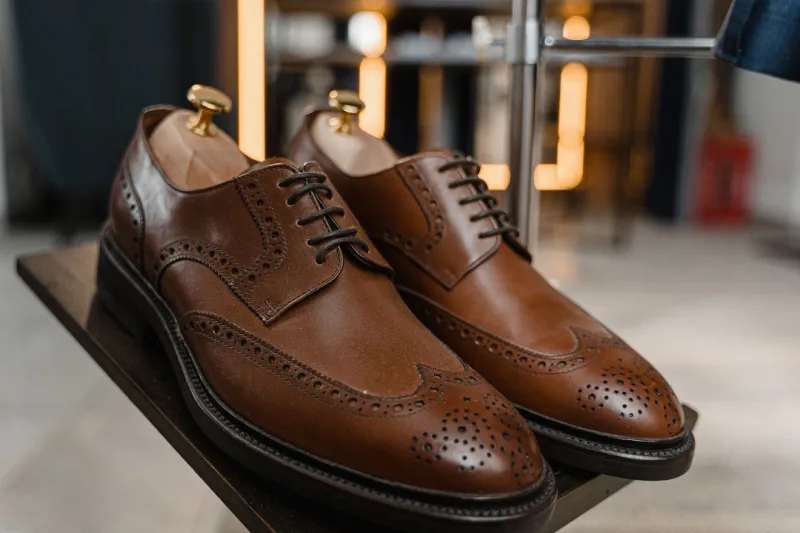
Within that first purchase, the specific shoe chosen carries its own vocabulary. A clean Oxford in dark tan calf leather speaks of someone who values understatement and understands that authority need not be announced. A well-structured Chelsea boot in black suggests adaptability, an appreciation for the versatile and the enduring. A brogue, with its decorative perforations and storied British heritage, often signals someone drawn to craft for craft's sake — to the idea that beauty and function are not in opposition.
The heel height chosen by a woman making her first considered investment tells a similarly nuanced story. A modest block heel in a refined leather suggests a preference for confidence that is grounded rather than performative. A sleek pointed-toe flat in a quality suede reveals someone who understands that elegance does not require elevation.
None of these readings are absolute, of course. Shoes are not a personality test. But the instincts that guide a person toward one silhouette over another — particularly when they are spending meaningfully and therefore choosing carefully — are rarely arbitrary.
The British Context: Restraint as Sophistication
In the United Kingdom, there is a particular cultural grammar around footwear that shapes how these first purchases tend to manifest. British taste, at its most refined, has always favoured the restrained over the ostentatious. A well-made shoe is admired precisely because it does not shout. Its quality is legible to those who know what to look for, and invisible to those who do not — and that selectivity is, in itself, a form of social intelligence.
This is why the first serious British shoe purchase so often gravitates toward the classic rather than the fashionable. The Goodyear-welted Oxford. The hand-finished Derby. The structured loafer in a leather that will develop character over years rather than months. These are not choices made for immediate impact. They are made for longevity — aesthetic, physical, and cultural.
To choose well the first time is to demonstrate an understanding that British style, at its finest, is about investment rather than impression.
The Quiet Economics of Getting It Right
There is also a pragmatic dimension to this pivotal moment that should not be underestimated. Many who arrive at their first premium purchase do so having already spent considerably more — cumulatively — on inferior alternatives. The arithmetic, once calculated honestly, is often revelatory.
A pair of shoes purchased for £80 and replaced annually over a decade costs £800. A pair purchased for £350 and maintained with care over the same period — resoled once, polished regularly, stored properly — costs considerably less in real terms, and yields something the cheaper alternative never could: a shoe that improves with age, that carries memory in its leather, and that becomes, over time, uniquely one's own.
The person who grasps this on their first considered purchase has understood something that takes others considerably longer to learn: that quality is not an indulgence. It is, in the long run, the more rational choice.
The Ripple Effect of One Good Decision
Perhaps the most telling thing about a first serious shoe purchase is what tends to follow it. Rarely does it remain an isolated act. The person who invests thoughtfully in footwear for the first time almost invariably begins to apply the same logic elsewhere — to outerwear, to leather goods, to the broader architecture of their wardrobe.
This is the quiet power of a single considered decision: it recalibrates the standard by which all subsequent choices are measured. Once you have worn a shoe that fits with genuine precision, that holds its shape through years of use, and that earns compliments not from novelty but from quiet excellence, the appeal of the disposable alternative diminishes considerably.
In this sense, the first fine shoe is not merely a purchase. It is the beginning of a different relationship with the things one owns — one defined by discernment, patience, and the understanding that the best objects in a life are those that endure.
Choosing with Intention
For those standing at this threshold — drawn toward a first serious investment in footwear but uncertain how to proceed — the guidance is straightforward: resist the impulse to be swayed by trend, and instead ask what you will still wish to be wearing in ten years. Seek construction that rewards maintenance. Choose leather that will develop rather than deteriorate. And above all, take the time to be properly fitted, because a shoe that does not fit correctly is a compromise regardless of its other qualities.
The first considered purchase is a beginning, not an arrival. But it is a beginning that, made well, sets the tone for everything that follows.