Packed with Purpose: The Case for British Heritage Shoes as the Discerning Traveller's Most Reliable Companion
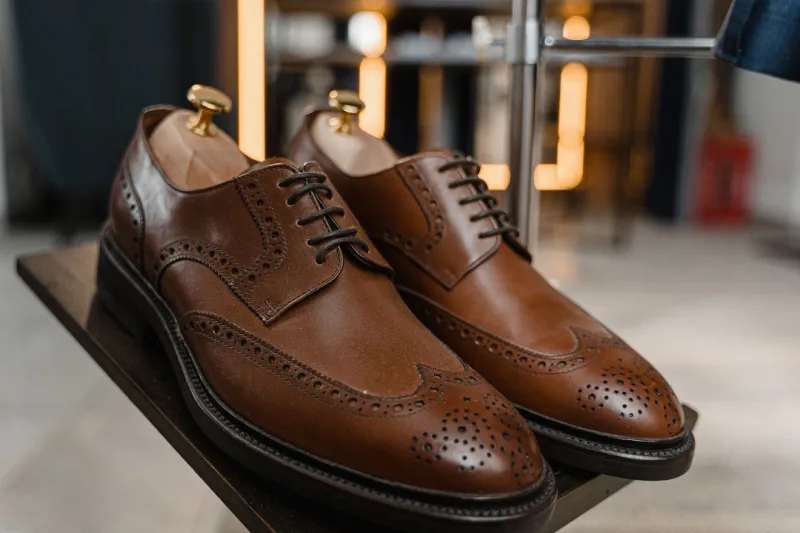
There is a particular kind of traveller — unhurried in manner, precise in preparation — who understands that the contents of a suitcase are a direct reflection of one's priorities. Clothing folds, accessories compress, but shoes present a more considered challenge. They occupy space, they carry weight, and yet no item in a travel wardrobe is called upon more frequently or across a wider range of circumstances. For this reason alone, the choice of footwear before a journey deserves as much attention as the itinerary itself.
British heritage footwear, shaped by centuries of craft tradition and refined by an understanding of both form and function, has long held a quiet advantage in this regard. These are shoes that do not merely survive travel — they thrive within it.
The Problem with Packing Light and Thinking Little
Most travellers, when pressed for time or space, approach footwear as a secondary concern. A pair of trainers for walking, something smarter for evenings, perhaps a third option for uncertainty — and suddenly, half the available luggage is devoted to shoes that serve only narrow, singular purposes.
This is the fundamental inefficiency of the undiscerning approach. When footwear lacks genuine versatility, it multiplies. When it lacks quality, it also fails — sole separation on a cobbled street in Edinburgh, a scuff that cannot be buffed away before an important meeting in Frankfurt, a heel that begins to speak its own unwelcome language halfway through a long gallery visit.
The discerning traveller recognises that fewer, finer choices eliminate this compounding problem entirely.
Why Heritage Construction Endures the Journey
The construction methods associated with traditional British shoemaking — Goodyear welting in particular — were not developed for the sedentary life. They emerged from an era when shoes were expected to perform across varying terrain, shifting weather, and extended daily wear. A welted shoe can be resoled, reconditioned, and returned to service in a way that cemented or glued footwear simply cannot.
For the traveller, this matters in a very practical sense. A shoe built to last does not deteriorate under the particular stresses of transit: the prolonged standing of airport queues, the repeated removal at security, the change in climate between a January departure from Heathrow and an arrival into a warmer continental city. Where lesser construction might begin to show strain, a well-made British shoe merely acquires a deeper character — a slight deepening of the leather's patina, a gentle moulding to the foot that makes each subsequent hour more comfortable than the last.
The Versatility Principle: One Shoe, Many Rooms
The true test of a travel shoe is not how it looks at departure — it is how convincingly it performs across every context the journey demands. A good leather Derby, for instance, in a mid-tan or chestnut finish, will move without apology from a morning of client meetings to an afternoon of museum corridors to an evening at a well-regarded restaurant. It requires no change of outfit logic, no second bag, no compromise.
Similarly, a structured brogue in a dark burgundy or deep brown occupies a rare position in the style spectrum: formal enough for the most considered occasions, yet sufficiently grounded in British tradition to feel entirely appropriate at a country house weekend or a whisky distillery visit in Speyside. It communicates something specific about its wearer — a person who has thought carefully, who respects occasion without being enslaved to it.
For women travelling on business or leisure, a low-heeled leather loafer or a refined block-heeled boot offers comparable range. Neither sacrifices elegance for practicality, nor practicality for elegance. These are shoes that understand the grammar of multiple environments.
The Psychology of the Well-Shod Traveller
There is a less tangible benefit to choosing quality footwear for travel, and it concerns the mental architecture of the journey itself. Decision fatigue is a well-documented phenomenon, and it is particularly acute during travel, when the number of micro-decisions — what to eat, which route to take, how to dress for an unplanned invitation — accumulates with surprising speed.
A shoe that works across contexts removes one source of that fatigue entirely. There is no morning deliberation, no anxious reassessment when plans change, no apology offered through inappropriate footwear. The traveller who packs two genuinely versatile pairs of well-made shoes arrives at each situation with one fewer thing to consider, and that clarity — quiet as it is — has a measurable effect on composure.
This is not vanity. It is a form of intelligent preparation, as considered as knowing one's hotel's cancellation policy or carrying a physical copy of a boarding pass.
Caring for Your Shoes in Transit
British heritage footwear rewards the small rituals of care, and travel need not interrupt them. A compact shoe bag protects the leather from scuffs within luggage. A folded pair of shoe trees — cedar is ideal — maintains the structure of the upper during transit and absorbs any residual moisture from a long day's wear. A small tin of neutral cream polish, no larger than a cufflink box, can restore a shoe's surface after a rain-dampened afternoon in almost any European city.
These are not burdensome additions to a travel kit. They are the marks of someone who understands the relationship between maintenance and longevity — a philosophy that applies as readily to a well-worn pair of brogues as it does to any other investment made with care.
Choosing Before You Go
The selection process itself is worth approaching with some deliberation. Before any significant journey, consider the full range of contexts you are likely to encounter: professional, social, physical, and climatic. Then ask which single pair — or which pair of pairs — covers the greatest number of those contexts without compromise.
For a long-haul business trip with leisure days appended, a structured Derby and a refined casual shoe in complementary tones will serve almost every occasion. For a cultural tour of British cities in autumn, a quality ankle boot in dark leather becomes the obvious anchor of the entire wardrobe. For a summer occasion abroad — a wedding, a festival, a long weekend — a polished loafer in tan or navy bridges the formal and the relaxed with characteristic ease.
In each case, the logic is the same: choose with intention, choose for range, and choose something built well enough to deserve the journey.
The Shoe as Luggage Philosophy
There is a certain satisfaction in arriving somewhere new with a suitcase that contains exactly what is needed and nothing superfluous. British heritage footwear, chosen thoughtfully and cared for properly, embodies that philosophy in leather and stitch. It does not demand to be noticed. It simply performs — across terminals and time zones, across formal dinners and early morning departures — with the quiet reliability of something made, from the very beginning, to endure.