Robed in Authority: The Unwritten Code of Footwear in Britain's Legal Profession
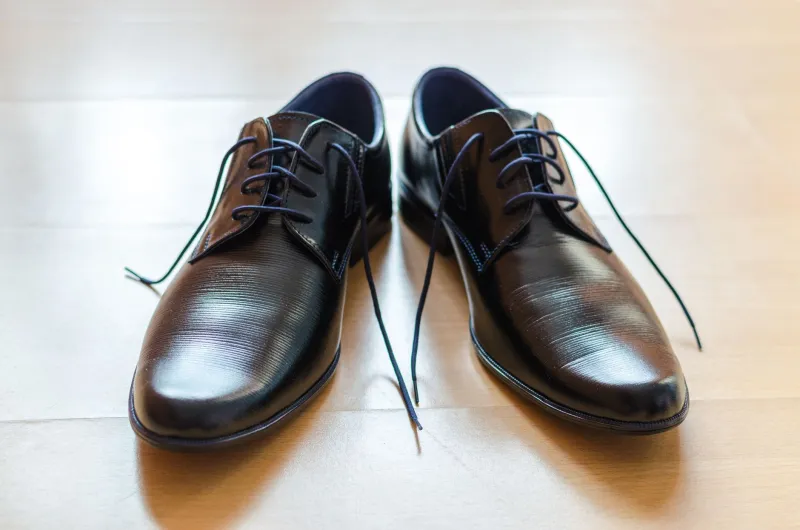
There are few professional environments in Britain where appearance is scrutinised with the same rigour as the courtroom. From the moment a barrister rises to address a judge, every element of their presentation is — consciously or otherwise — subject to assessment. The wig and gown command immediate attention, but it is often what rests upon the floor that speaks most quietly and most lastingly about the individual within the robes.
In the legal profession, footwear is not incidental. It is, in the truest sense, part of the professional armour.
The Weight of Tradition
British law is one of the oldest continuously practised legal systems in the world, and its relationship with formal dress reflects that continuity. The Inns of Court — Gray's Inn, Lincoln's Inn, the Inner Temple, the Middle Temple — each carry centuries of accumulated custom, and the expectation of appropriate dress runs through that tradition like a thread of black silk.
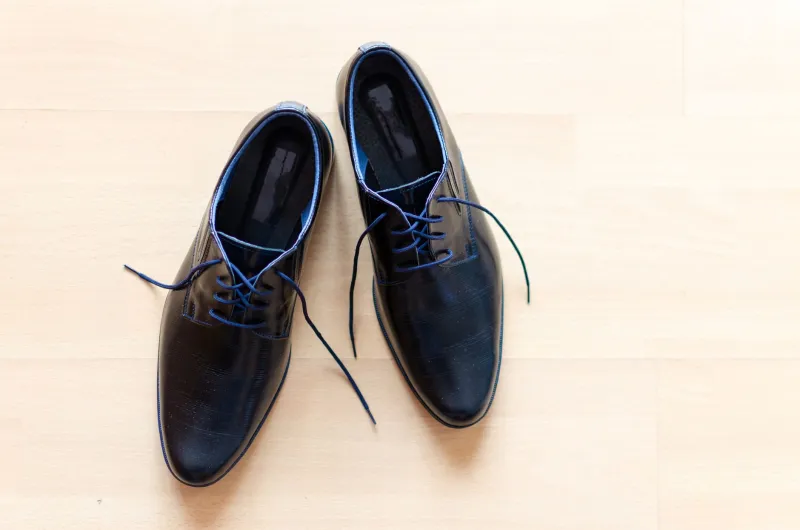
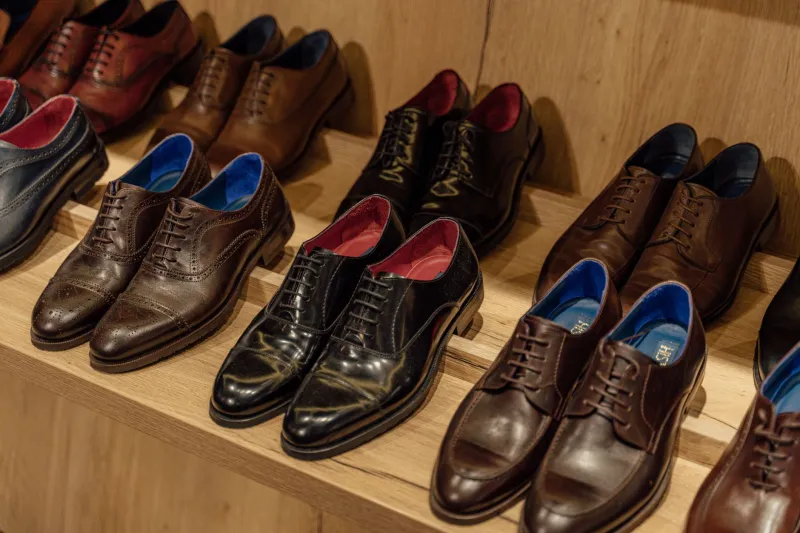
For male barristers, the convention has long favoured the Oxford brogue or the plain-capped Oxford in black calf leather. Nothing about the shoe should distract; everything about it should confirm. A well-maintained leather sole, a discreet silhouette, and a depth of polish that suggests daily attention — these are the hallmarks of a shoe that belongs in chambers.
For female barristers and solicitors, the calculus is more nuanced but no less considered. A low-to-mid court heel in black patent or smooth leather remains the professional standard in formal settings, though the rise of more progressive courtroom cultures has allowed for modest variation. What endures, regardless of gender or seniority, is the expectation of quality. A scuffed heel or a sole worn unevenly is noticed in ways that its wearer may not anticipate.
What Judges Wear — and Why It Matters
The footwear of the judiciary occupies a particularly interesting space. Judges, once robed, are largely concealed from the ankle down, yet the shoes worn beneath those robes are rarely chosen carelessly. Experienced members of the bench often describe their footwear choices as an extension of the mental preparation required to preside with authority.
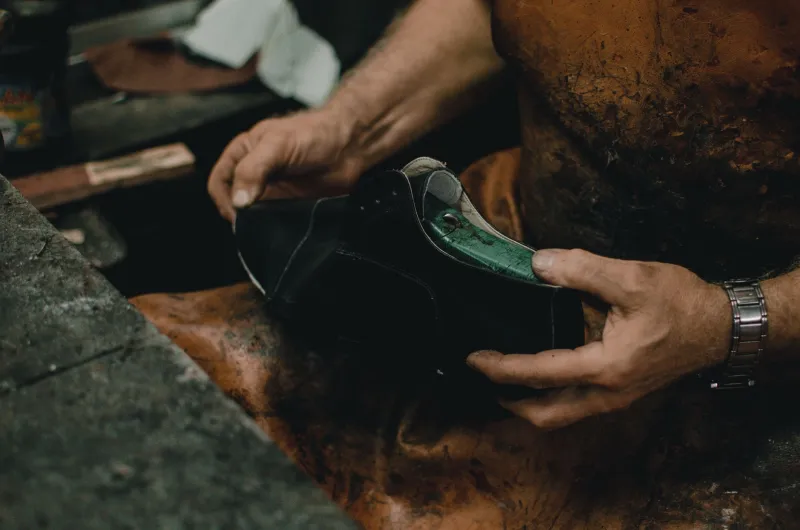
The preference among senior judges tends strongly towards the traditional: black Oxfords of substantial construction, resoled repeatedly over decades, carrying the kind of quiet biography that only genuinely fine leather acquires with time. There is a school of thought within legal circles that a judge's shoes, if examined closely, would tell you more about their judicial philosophy than any published judgement — a perhaps fanciful notion, but one that speaks to how seriously the profession regards the signals conveyed by material choices.
The Unspoken Rules of the Courtroom Floor
For those entering the legal profession, the guidance on footwear is rarely written down. It is absorbed through observation, through pupillage, through the occasional pointed remark from a senior colleague. Several principles, however, emerge consistently across chambers and firms.
Polish is non-negotiable. A shoe may be aged, even visibly worn, but it must be clean and polished. Dullness reads as indifference, and indifference is not a quality the Bar tolerates.
Noise carries. Stone-floored courtrooms and marble-tiled corridors amplify sound in ways that modern offices do not. A heel that strikes with excessive force — whether from a steel tip or an inappropriately hard sole — can disrupt proceedings and draw unwanted attention. The ideal courtroom shoe moves with a degree of discretion.
Comfort sustains performance. A barrister may stand for several hours during a complex hearing. A solicitor may walk miles between appointments on a demanding day. The shoe that looks correct but fails physically is a liability. The finest legal professionals understand that enduring comfort and formal propriety are not in conflict — they are both requirements of the role.
Investing in the Appropriate Pair
For those building a wardrobe suitable for legal practice, the case for investment footwear is particularly compelling. The courtroom is not the environment for compromise. A shoe purchased on grounds of economy alone will, within a season, communicate exactly the calculation that produced it.
For male practitioners, a Goodyear-welted Oxford in black calf — capable of being resoled and maintained across many years — represents the most intelligent single purchase available. For female practitioners, a structured court shoe or a low-heeled Derby in fine leather offers the same combination of authority and longevity.
The key, in both cases, is to choose a shoe with sufficient structure to retain its shape under prolonged wear, and sufficient quality of leather to develop, rather than degrade, with age. A shoe that improves with wearing is a shoe worth wearing in the most demanding professional context imaginable.
The Shoe as Professional Statement
Britain's legal profession is one that prizes precision, preparation, and the considered deployment of every available tool. That the shoe should be among those tools is, on reflection, entirely logical. In an environment where advocacy depends on credibility, and credibility depends in part on presentation, there is no detail too small to attend to thoughtfully.
The right pair of shoes will not win a case. But the wrong pair — scuffed, ill-fitting, carelessly chosen — may quietly undermine the confidence that winning requires. In chambers and courtrooms across England and Wales, the most experienced practitioners understand this without needing to articulate it. It is, as so much in British professional life, simply understood.