On Loan and Under Scrutiny: The Delicate Etiquette of Lending Your Finest Shoes
Clothing, as a general rule, travels relatively freely between friends. A dress borrowed for a wedding, a jacket lent for an interview, a scarf passed across a dinner table when the evening turns cold — these are the small economies of friendship that most people navigate without difficulty. Shoes, however, are different. They always have been.
The difference is not merely practical, though the practical dimension is real enough. It is also deeply psychological, and in British social life — where the unspoken carries as much weight as the explicit — it touches on questions of trust, respect, and the particular intimacy of the objects that accompany us most faithfully through our days.
Why Shoes Are Not Like Other Things
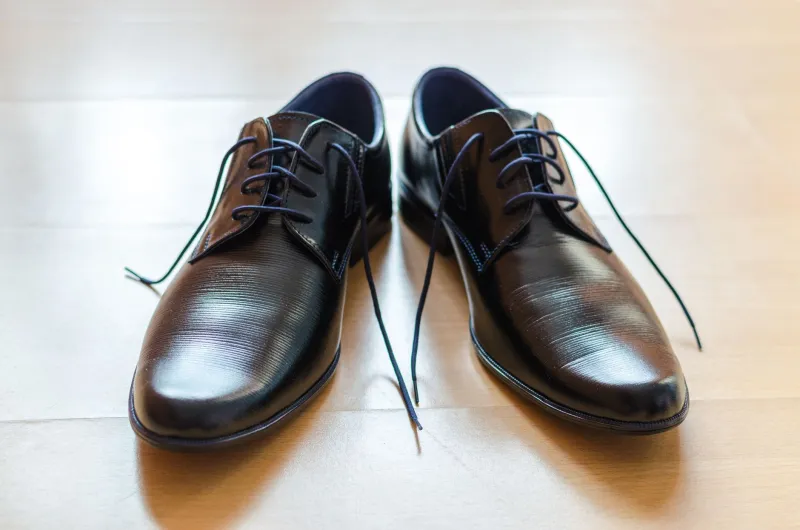
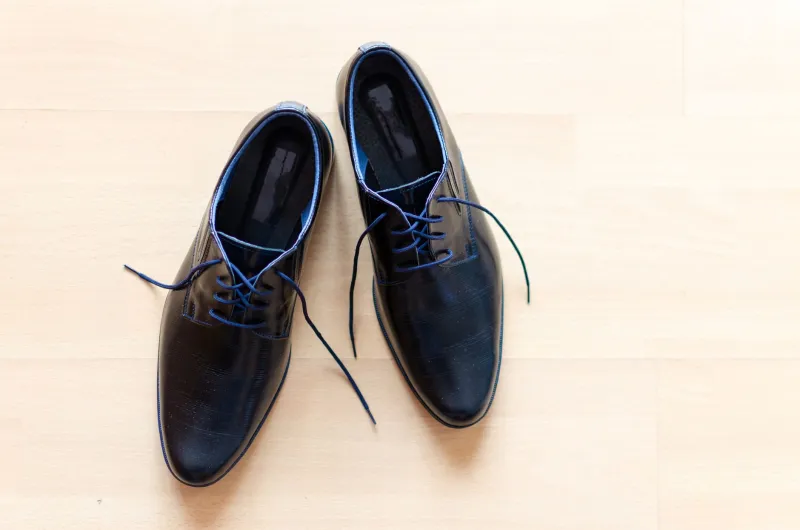
A shoe, unlike any other garment, is shaped by its wearer. Not metaphorically, but physically and permanently. The insole compresses to the precise weight distribution of a specific foot. The upper creases at the exact points where that foot flexes. The heel counter softens and angles in response to the particular gait of the person who has worn it. A shoe of genuine quality, worn regularly for a year or more, is a record of its owner — as individual as a fingerprint.
This is why the prospect of lending a cherished pair produces a hesitation that the lending of a coat does not. It is not merely the shoe's financial value that gives one pause. It is the sense that something has been shaped to you, and that to place it on another foot — a foot of different dimensions, different weight, different movement — risks undoing that shaping in ways that cannot be reversed.
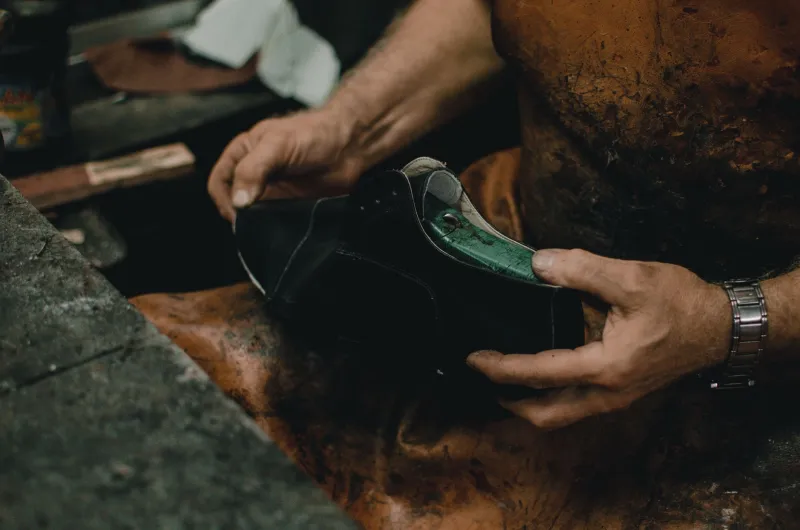
Psychologists who study object attachment suggest that the items most central to our sense of self are those that have undergone visible transformation through use. A shoe that has been worn in, polished, resoled, and maintained over years occupies precisely this category. To lend it is, in a small but genuine sense, to lend a part of one's own history.
When the Request Arrives
The moment a friend or family member asks to borrow a pair of your finest shoes, a brief but genuine evaluation is required. Not of their character — that, one hopes, is already established — but of the specific circumstances of the request.
The questions worth asking, even silently, are practical ones. Is the foot in question close enough in size and width to your own that the shoe will fit without strain? A shoe forced onto a slightly wider foot will stretch the upper at the sides, potentially beyond recovery. A shoe worn by a significantly smaller foot will be walked in incorrectly, placing pressure on parts of the sole and heel designed for a different distribution of weight.
The occasion matters too. A pair of fine Oxfords lent for a job interview in a carpeted office presents a very different risk profile to the same pair lent for a summer wedding on a gravel drive. Leather soles and wet grass are a combination that should give any considerate lender pause.
The Etiquette of Refusal
British social culture has, over centuries, developed considerable sophistication in the art of the gracious refusal — the decline that does not wound, the boundary that is communicated without the discomfort of directness. When it comes to lending shoes, this skill is occasionally required.
The most effective refusals are those grounded in practicality rather than sentiment. 'They're actually quite narrow — I think they'd be uncomfortable on you' is both honest and considerate. 'They're in the middle of being broken in and I worry they might rub' is plausible and kind. What one ought to avoid, where possible, is the refusal that implies a lack of trust in the borrower's care. Even if that concern is entirely legitimate, expressing it directly risks more damage to the friendship than the shoe in question is worth.
There are, of course, relationships in which a direct and honest conversation is entirely appropriate. A sibling, a very close friend, a partner — these are people with whom the terms of a loan can be discussed plainly, and with whom the expectation of return in equivalent condition can be stated without awkwardness.
When You Do Choose to Lend
If the decision is made to share a treasured pair, a small number of practical steps will significantly reduce the risk of regret.
Before the shoes are handed over, clean and condition the leather. This is not merely a question of presentation — it ensures that the leather is in the best possible condition to withstand the additional stress of being worn by a different foot.
Include the shoe trees. This may seem an unusual request to make of a borrower, but the instruction to insert the trees immediately after each wearing is the single most important thing the borrower can do to preserve the shoe's shape. A brief explanation of why — that the leather retains moisture from the foot and must be dried in its correct form — is usually sufficient to ensure compliance.
Ask, gently but clearly, about the conditions of use. Not as an interrogation, but as a conversation. The borrower who understands that the shoes matter to you will, in most cases, treat them accordingly.
What the Act of Borrowing Reveals
In British culture, the willingness to lend something genuinely valued is a quiet but significant expression of regard. It says, without words, that the friendship is worth more than the object. The borrower who understands this — who returns the shoes clean, polished if possible, and accompanied by some acknowledgement of the trust placed in them — demonstrates a quality of character that is worth more than any pair of shoes.
Conversely, the borrower who returns a pair of fine leather shoes scuffed, unpolished, and with no apparent awareness that anything has been entrusted to them reveals something equally telling — not necessarily about their character in the broader sense, but about their relationship with quality, care, and the objects of other people's attachment.
Shoes, in this light, are not merely footwear. They are a small but reliable test of the people in our lives. And for that reason alone, the question of whether to lend them is never quite as simple as it first appears.