Heirlooms, Relics, and Honest Farewells: The Art of Deciding What Becomes of Your Finest Shoes
There is a particular kind of stillness that settles over a room when someone opens a box of their father's shoes. The smell of old leather and dried polish, the faint impression of a heel worn slightly to one side, the laces still threaded as they were last tied—perhaps years ago, perhaps decades. It is a moment that asks something of you. Not merely sentiment, but judgement.
The British relationship with preservation is well-documented and, in many respects, admirable. We mend rather than discard, restore rather than replace, and hold onto things that carry meaning long past the point at which purely rational economics might counsel otherwise. In footwear especially, this instinct is often correct. A shoe built with genuine craft—Goodyear-welted, hand-lasted, constructed from full-grain leather—can outlast its original owner if treated with the care it deserves. But not every shoe that carries emotional weight carries structural integrity. And knowing the difference is its own form of respect.
The First Honest Assessment
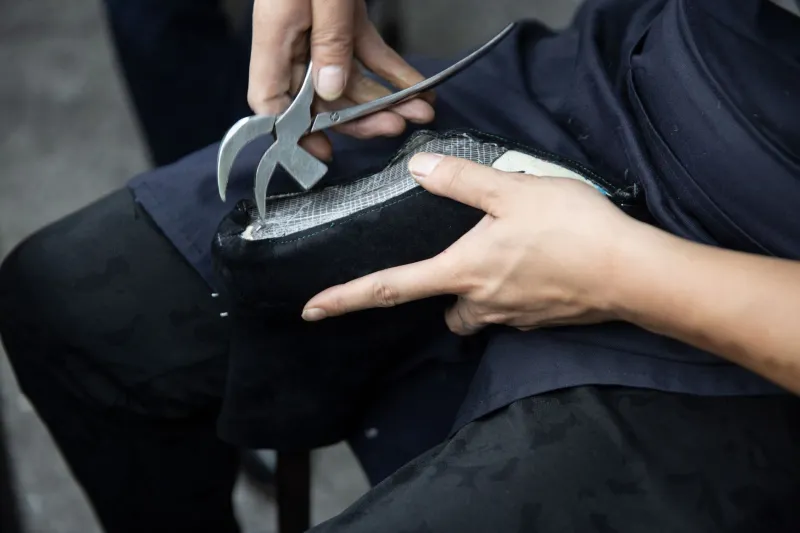
Before sentiment is permitted to speak, the shoe must be examined on its own terms. This means placing it on a flat surface and observing it from every angle, not with nostalgia but with the same quiet attention a skilled cobbler brings to a first appraisal.
Begin with the upper. Full-grain leather that has dried and cracked deeply—not surface scuffs, but fissures that run through the hide itself—rarely restores to anything approaching its former self. Conditioning can slow deterioration, but it cannot reverse structural damage to the material. Stitching that has frayed along the welt, or where the upper meets the lining, signals a repair that is both possible and worthwhile if the surrounding leather remains sound. Separation between the upper and sole, however, is more nuanced: on a Goodyear-welted shoe, resoling is a straightforward and relatively affordable intervention; on a cemented construction, the economics shift considerably.
The insole and last shape deserve equal scrutiny. A shoe that has moulded deeply to one foot over many years may prove uncomfortable—even unwearable—for another. This is not a flaw of the shoe itself, but a reality of inheritance that is often overlooked in the romantic imagining of passing footwear between generations.
When Restoration Makes Genuine Sense
Restoration is worth pursuing when three conditions align: the shoe's construction is sound at its foundation, the leather retains sufficient life to respond to treatment, and the cost of professional intervention is proportionate to the shoe's intrinsic or sentimental value.
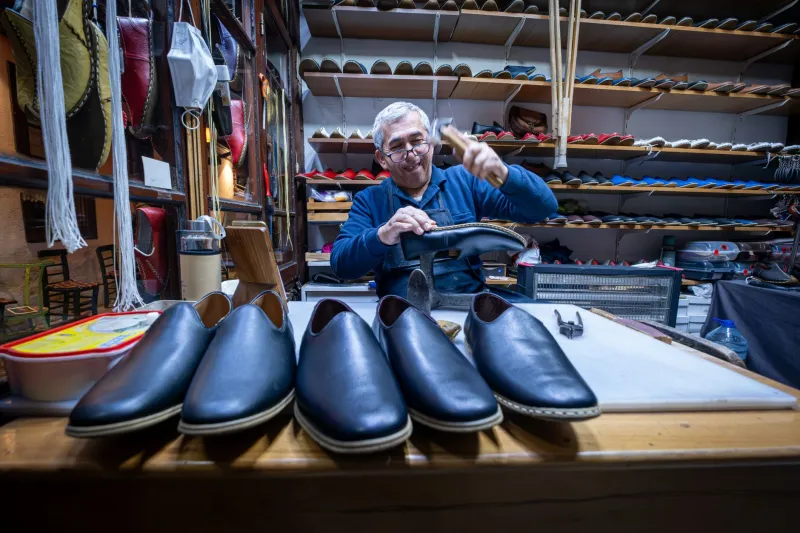
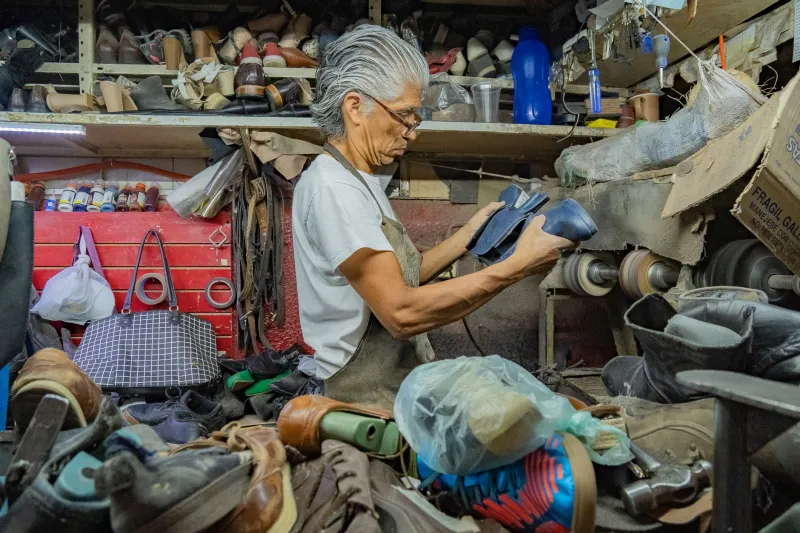
A quality cobbler—and Britain still has a number of exceptional ones, particularly in London, Northampton, and Edinburgh—can resole, reheel, recondition, and in some cases re-welt a shoe that has been properly stored and periodically maintained. For a pair of well-made Oxfords or brogues that have simply been neglected rather than abused, this process might cost between £80 and £200 depending on the extent of the work. Against the original purchase price of a shoe that might have retailed at several hundred pounds, this represents sound arithmetic.
Restoration timelines vary. A straightforward resole and heel replacement might be completed within a fortnight. More involved work—recrafting a welt, replacing a damaged lining, or addressing significant upper repairs—can take four to six weeks at a reputable workshop. Patience is part of the process, and rushing it rarely serves the shoe.
It is also worth noting that restoration is not simply a financial calculation. There are shoes that deserve to be worn again because of what they represent—a father's wedding shoes, a grandfather's handmade pair from a Northampton maker now long closed. In these cases, the investment transcends cost-benefit analysis and becomes something closer to an act of continuity.
When Retirement Is the Honest Answer
There are shoes that cannot be saved, and recognising them requires setting aside the story they carry in favour of the object they have become. Leather that has lost all suppleness and responds to no conditioning. Welts that have rotted through. Heels worn down to the rand. Linings that have disintegrated entirely. These are not shoes awaiting restoration; they are shoes that have completed their working life.
Retiring a shoe is not an act of abandonment. It is an acknowledgement of service rendered. A worn-out pair of brogues that accompanied someone through decades of professional life, country walks, and formal occasions has done precisely what it was designed to do. To attempt to resurrect it beyond its natural end is, in some respects, a disservice—both to the shoe and to the memory of the person who wore it.
In such cases, the most considered response may be to keep a single shoe as an object of memory rather than use, or to photograph it carefully before letting it go. Some families commission a small display—a shadow box, a glass case—in which a particularly meaningful pair rests as an heirloom of a different kind: not worn, but witnessed.
The Question of Inheritance Itself
Passing shoes between generations is an act that requires honest conversation, not assumed gratitude. Before presenting a pair of inherited footwear to a son, daughter, or younger relative, it is worth asking several practical questions. Do the shoes fit, or can they be adjusted? Are they of a style and construction the recipient will genuinely wear, or will they be accepted politely and stored indefinitely? Is the gesture one of generosity or of offloading?
The most meaningful inheritances in footwear are those accompanied by context. The story of where a shoe was made, how it was worn, what occasions it witnessed—this is the true inheritance. The physical object is its vessel. When both are in reasonable condition and the recipient has genuine use for them, passing them on is one of the quiet dignities of a considered life. When the object alone remains, without the possibility of wear, the inheritance may be better expressed through memory than through leather.
A Framework for the Undecided
For those standing in that particular stillness—box open, shoes in hand, unsure of what comes next—a simple framework may help.
If the shoe is structurally sound and the leather retains life, restore it. Find a skilled cobbler, invest in professional conditioning, and allow the shoe to re-enter service. If the shoe is structurally compromised but emotionally significant, consider preservation as an object rather than footwear. If the shoe is neither wearable nor meaningful beyond a general sense of nostalgia, retire it with gratitude and without guilt.
The discerning wardrobe, at every stage of life, is built on honest decisions. The shoes that deserve a second chapter will reveal themselves clearly under an honest eye. The ones that have earned their rest will do the same. Learning to tell the difference is, in its own way, a form of respect—for the craft that made them, for the person who wore them, and for the considered life that receives them.