The Two-Shoe Commute: What the Tote-Bound Oxford Says About Modern British Work

Photo: William Murphy from Dublin, Ireland, CC BY-SA 2.0, via Wikimedia Commons
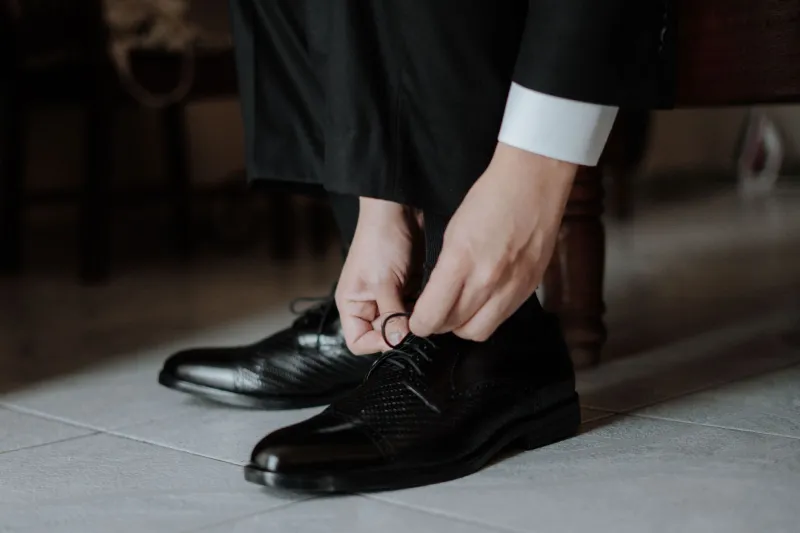
There is a scene now played out in carriage after carriage across the London Underground, the Manchester Metrolink, and the Glasgow Subway: a commuter in a tailored coat and considered trousers, bending to swap a pair of chunky trainers for a pair of polished leather shoes, which have travelled the entire way in a tote bag. The swap takes thirty seconds. It is performed without ceremony, often without eye contact. And it is one of the more revealing rituals of contemporary British working life.
The Rise of the Transit Shoe
The pandemic did not invent the division between the shoe you travel in and the shoe you arrive in — cyclists and motorbike commuters had long since solved that problem — but it legitimised it on a mass scale. With offices reopening on hybrid schedules, the three days a week that professionals do commute have become days of deliberate efficiency. Comfort en route; presentation at the desk.
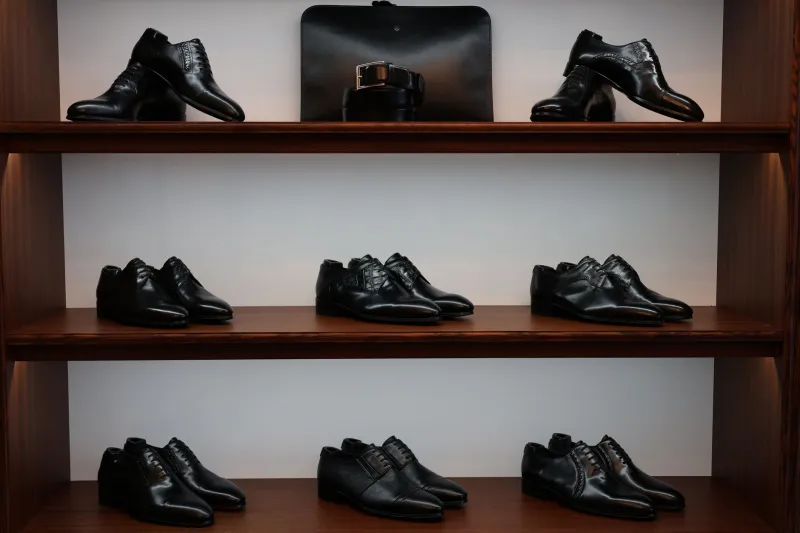
To some observers, this represents a dilution of standards: the surrender of the City shoe to the gym shoe. We would argue it is more interesting than that. The commuter who carries fine leather in a tote has not abandoned the formal shoe; they have repositioned it as an object of intention. It is packed, protected, and produced — rather like the umbrella, that other quintessentially British accessory that exists to be deployed at the right moment.
What the Split Actually Signals
The two-shoe commute tells us that presentation still matters, but its theatre has moved. Where once the shine was visible on the Northern line at 7.40am, now it appears at the office door. Professionalism has become something performed for colleagues rather than for strangers. That is a genuine cultural shift, and it is not necessarily a shallow one. There is something quietly disciplined about a person who refuses to let a crowded carriage scuff their quarter brogues.
There is, however, a right way and a wrong way to manage the transition. The wrong way is the flimsy fold-up flat, the kind of afterthought that undoes the effort of the rest of the outfit. The right way is to treat the desk shoe as seriously as the desk wardrobe itself.
Building a Considered Commute Rotation
For those navigating this hybrid rhythm, a few principles serve well.
Choose leather that forgives the bag. A shoe with a supple upper and a structured sole — a well-made loafer, a sleek Chelsea boot in winter — travels better than something rigid. Keep a shoe bag, not a plastic carrier; leather needs to breathe even in transit.
Respect the rotation. Alternating pairs allows leather to rest and dry between wears, extending the life of each shoe considerably. With a three-day office week, two serious pairs are genuinely sufficient — provided they are good ones.
Keep the kit at the desk. A small tin of polish and a horsehair brush in a drawer transforms the five minutes before a meeting into a small act of composure. The commute shoe system works best when the arrival shoe is maintained where it lives.
Can the Commute Shoe Make a Comeback?
There are signs of a counter-movement. As dress codes have loosened, the formal shoe has been freed from formality itself — worn with denim and relaxed tailoring rather than reserved for suits. The Chelsea boot and the refined trainer-leather hybrid have reclaimed territory precisely because they no longer signal obligation. In a sense, the tote-bound shoe and the stylish comfort shoe are converging: both represent footwear chosen rather than imposed.
The two-shoe commute, then, is less a compromise than a negotiation — between comfort and craft, between the journey and the destination. Handled well, it is not a retreat from elegance but a redistribution of it. The discerning commuter does not choose between the trainer and the leather shoe. They understand what each is for.